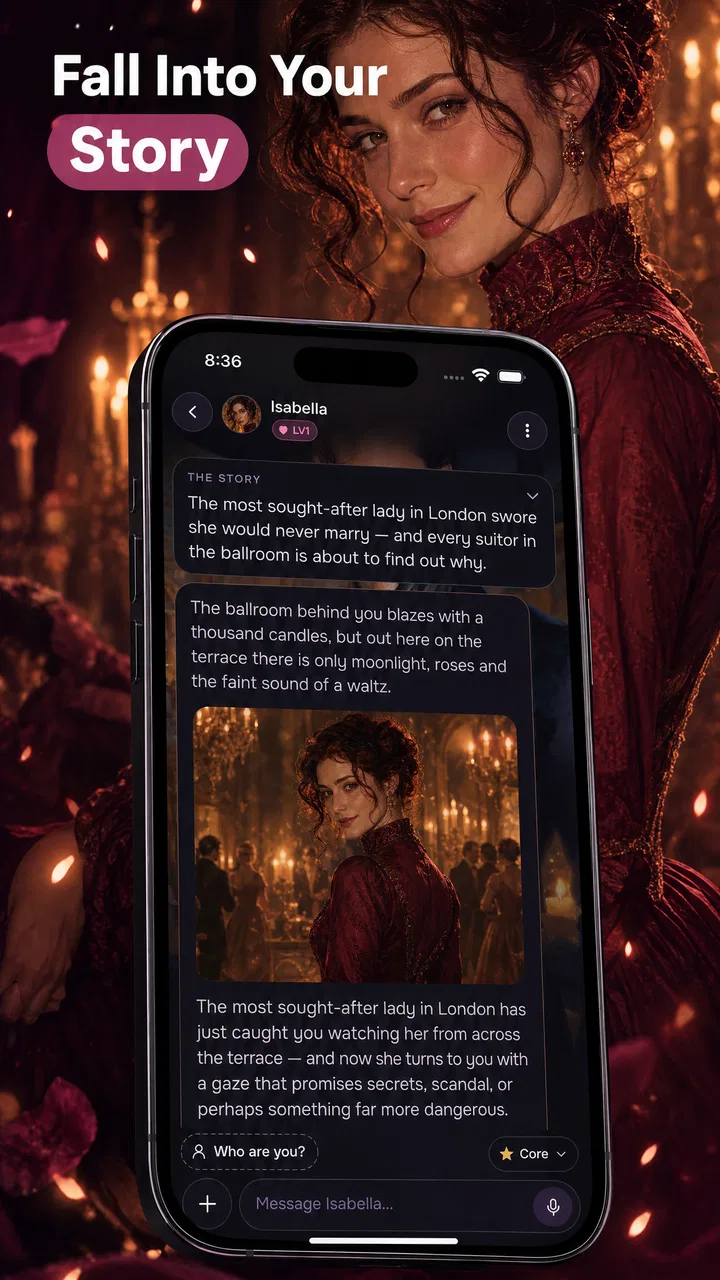
Candy AI: Create Anything
- 3.5
- Rating
- 50.00K
- Installs
- Free
- Price

 Analysis by App-foxy
I approached Candy AI: Create Anything as an everyday creative tool rather than a replacement for a full photo editor. It belongs to the Art & Design category, comes from Candy Studio Apps, and focuses on generating AI-assisted photos and videos with very little setup. That makes it appealing when I want a quick visual idea without opening a complicated desktop program, although the convenience also means I pay closer attention to what I share and what I expect the app to do.
My first impression is that this is aimed at people who want results quickly: a social post, a playful portrait, a visual concept, or a short piece of content to develop later. The store summary promises instant AI creations, but I found the more useful way to think about it is as a fast experimentation space. It can help turn a rough idea into something visual, yet it should not be treated like a precise design workstation or a dependable replacement for professional retouching.
How Candy AI fits into a trust-conscious creative workflow
I treat trust as part of the creative workflow, not a separate box to tick after making something. Before settling into a routine, I decide which kinds of images and prompts are suitable for experimentation and which should stay off an AI tool; that boundary makes later choices faster and clearer. From there, the useful question is how to make ordinary sessions more consistent without assuming the app offers controls it may not show.
You May Also Like

 Blood Strike: 2.5 Anniversary
Blood Strike’s Loadouts Turn Every Drop Into a Tactical Gamble
A close look at Blood Strike’s custom loadouts: how fast access to signature weapons reshapes its battle royale rhythm, rewards preparation, and narrows the gap between fights.

 Pandora - Music & Podcasts
Pandora’s Music Is Easy to Start, but Harder to Recover
Pandora’s strength is its low-effort path from a seed to a station. Its weak spot is how much confidence it asks you to place in connection, setup, and quiet recovery.

 8 Ball Pool
 Is Built on Rivalries, Rematches, and Routine
A close look at the rivalries, rematches, shared routines, and unanswered safety questions that turn a quick pool match into a persistent mobile community.

 Samsung Music
’s Quiet Strength Is Playing What You Already Own
Its reach comes less from spectacle than from dependable access to a personal library. That simplicity is both the app’s strongest retention engine and its ceiling.

 AccuWeather: Weather Radar
AccuWeather Review: A Quick, Clear Forecast for Everyday Decisions
For everyday plans, the best forecast is the one you can understand quickly. AccuWeather makes rain timing, radar, and local conditions easy to act on, with a few trade-offs.

 Hill Climb Racing
Why Hill Climb Racing Still Turns Crashes Into One More Run
A tiny car, a bumpy hill and one more upgrade: Hill Climb Racing keeps resurfacing because its simple chaos makes every near-miss feel personal.
More From Our News Desk



A simple starting point for casual visual projects
The strongest reason to try the app is its low entry barrier. Someone who does not know layers, masks, color curves, or video timelines can still approach an AI creation app with a clear idea and see what happens. I would use it for brainstorming a poster mood, making a temporary image for a private group chat, or exploring different looks before committing time to a more controlled editor.
That simplicity matters on a phone. Traditional alternatives often give me much finer control, but they also demand more patience. A conventional photo editor is better when I need exact cropping, selective adjustments, typography, or a repeatable brand style. A video editor is better when timing, sound, transitions, and manual sequencing are central. Candy AI is more attractive at the earlier stage, when the question is “What could this idea look like?” rather than “How do I finish this production perfectly?”
The app is free to install, which makes testing less intimidating. It carries a Teen content rating, so I would still treat it as an app for deliberate use rather than something to hand to a child without supervision. In-app purchases range from $6.99 to $69.99 per item, an important detail if you are experimenting casually and tend to tap through upgrade screens without checking the amount.
What its public reception suggests
The app has an average rating of 3.5 from around 463 ratings and 44 reviews, with over 50 thousand installs. I read that as a mixed but meaningful signal: enough people have tried it to establish interest, while the score suggests that the experience may not feel equally smooth for everyone. I would not use the rating alone to judge the quality of any individual creation, because AI output can vary sharply depending on the idea, source material, and the user’s expectations.
The current version is 1.7.3, and the minimum operating system is Android 9. That makes the compatibility requirement fairly approachable for many Android phones, but I would still keep expectations realistic on older hardware. AI-focused creation can feel less comfortable when a device has limited storage, a weaker processor, or a connection that struggles with media-heavy tasks. The app’s usefulness depends not only on its interface but also on how patiently you are willing to wait for a result and review it afterward.
The first trust question: what am I actually choosing?
With an AI image or video app, I do not judge trust by polished visuals alone. I look for moments where the app makes the user’s choice clear: selecting a source image, entering a creative instruction, saving a result, sharing it, or moving toward a paid item. Those are the points where I want to know what I am about to provide and what action will happen next.
I would therefore read the permission prompts and any privacy or account screens directly on my device before uploading personal material. I would not assume that a creative app has permission to use every part of my phone simply because it can create media. If a prompt asks for access to photos or the camera, I would consider whether that access matches the task I am trying to complete. If I only want to experiment with an existing image, I would avoid granting broader access than necessary when the operating system offers a narrower choice.
The safest habit is to treat every upload as a deliberate decision, not as a harmless test. A casual selfie, a family photograph, a work document, and an image containing someone else’s face do not carry the same privacy implications. I would begin with a non-sensitive image or an original illustration, learn how the workflow behaves, and only then decide whether the app belongs in a more personal routine.
Permissions, account controls, and visible choices
I cannot responsibly turn a creative result into a promise about data handling. The practical approach is to inspect the controls that are visible when you use the app: operating-system permission settings, account options, content-sharing actions, and any screen that explains how uploaded or generated material is handled. These controls matter more to me than vague assurances because they show what I can actually change.
Before creating anything personal, I would check whether the app lets me use it without connecting an account, whether sign-in is required for saving or syncing, and whether there is a clear way to manage the account later. I would also look for the difference between saving a file locally and publishing or sharing it through another service. Those actions are easy to confuse when I am moving quickly, especially on a small screen.
If I decide to stop using the app, I would revisit the account area and the phone’s permission settings rather than simply deleting the icon. Removing an app may stop future access from that installation, but it is not the same question as managing an account or previously created material. I would follow the controls presented in the app and the platform settings, keeping screenshots or notes of any important choice when the content is sensitive.
Where data sensitivity becomes real
The most sensitive moment is usually not the final image. It is the moment before generation, when I select a source photo or type a prompt that may reveal personal information. A portrait can expose a person’s identity. A background can reveal a home, school, workplace, or location. A prompt can contain names, private plans, health details, or information about another person who never agreed to participate.
For that reason, I would avoid uploading identification documents, private correspondence, unreleased business material, or photographs of people who have not agreed to the use. I would also remove unnecessary background details before uploading a picture. Cropping is not a complete privacy solution, but it can reduce accidental exposure and makes the creative request more focused at the same time.
There is a useful everyday example here. Imagine I want a new profile image for a community forum. I could choose a simple portrait with a neutral background instead of a photograph taken outside my home. I would write a prompt that describes the visual style without adding my full name, workplace, or other personal context. After generation, I would inspect the result for odd text, altered facial details, or background elements that make the image less suitable for public use.
That last inspection is important because AI output is not automatically safe just because it looks attractive. A generated image may unintentionally change a person’s appearance, add misleading details, or create a result that another viewer could misunderstand. I would never use a generated likeness to impersonate someone, and I would ask permission before transforming another person’s photograph for anything beyond a private experiment.
Keeping control over the creative process
AI tools are most useful to me when I remain the editor. I would start with a narrow request, review the result, and change one element at a time. If the first attempt is too vague, adding every possible instruction at once makes it harder to understand what improved the output. A shorter prompt focused on subject, mood, setting, and format is usually easier to evaluate than a paragraph packed with unrelated demands.
I would also keep my original image separate from the generated version. That simple habit prevents an experiment from replacing the source I may later need. For an important project, I would save a copy outside the app and record which version I preferred. This is especially useful when I am comparing several visual directions for a poster or social campaign and do not want to rely on memory.
A second practical tip is to use the app for concept development before polishing elsewhere. I might generate a rough visual direction in Candy AI, then move to a familiar editor for exact text, cropping, accessibility checks, color consistency, or final export. This division of labor plays to the app’s speed without asking it to solve every part of the project.
A third is to review generated text inside images with suspicion. AI-created lettering can look convincing at a glance while containing misspellings or distorted characters. If I need a readable title, logo, price, date, or instruction, I would add that text manually in a conventional design tool. The generated background can remain useful, but the information-bearing layer should be under direct human control.
Free access and the point where cost changes the decision
The free starting point is useful for deciding whether the style of creation suits me, but I would not treat “free” as meaning that every workflow is unlimited or that every desirable result is included. The listed in-app purchase range is wide enough that I would pause before confirming anything, especially if I am only looking for occasional entertainment.
I would first test the basic experience with a low-stakes project and ask myself whether the results are good enough for my actual purpose. If I need only one occasional image, a conventional free editor may be better value because it gives me predictable manual control. If I create frequently and value speed over precision, a paid option inside an AI app may make more sense, but only after I understand what the purchase unlocks and whether it matches my usage.
I would also avoid building a client deadline around an untested generation workflow. For personal experimentation, an imperfect result is part of the fun. For paid work, school submissions, or public announcements, I would keep a backup method ready. That might be a standard photo editor, a manual drawing app, or a video editor with tools I already know. The fallback protects me from losing time if an output needs more correction than expected.
Who will enjoy it, and who should choose something else?
I think Candy AI is a good match for curious beginners, social-media users who want quick visual variations, and anyone who likes exploring ideas without learning a large professional suite. It can also help a designer at the sketching stage, provided the final work is checked and refined elsewhere. The app’s appeal is strongest when speed, novelty, and accessibility matter more than exact repeatability.
I would be more cautious about recommending it to photographers who need faithful retouching, illustrators who require precise brush control, or video creators who depend on detailed editing timelines. A manual tool is usually better when every element must remain predictable. I would also steer away from using it for sensitive personal material unless I had carefully reviewed the visible permissions, account controls, and sharing choices on my own device.
Parents and guardians should take the Teen rating seriously. Even when the intended use is harmless, AI creation can produce unexpected imagery or encourage users to upload photographs without thinking through consent. I would explain the difference between making a playful edit of one’s own image and altering someone else’s image without permission. That conversation is more useful than simply assuming that a creative app is automatically safe.
My final view after weighing convenience against control
I see Candy AI: Create Anything as a quick creative companion, not a complete studio. Its free entry point, approachable concept, and focus on AI-generated photos and videos make it worth trying for low-risk visual experiments. The developer is Candy Studio Apps, and the app has attracted a modest but noticeable audience, though its 3.5 average rating tells me to keep expectations measured rather than assuming every result will be polished.
My recommendation comes with a clear boundary: use it for ideas and personal experimentation, keep sensitive uploads to a minimum, inspect every permission and account choice, and review each generated result before sharing it. I would not enter private information into a prompt, upload someone else’s photograph casually, or rely on an untested output for an important deadline.
For me, the best workflow is selective. I would use the app to explore a visual direction, preserve the original material, correct important details in a conventional editor, and make the final sharing decision myself. That balance gives the AI speed without surrendering the user’s judgement. If you want instant creative variations and are comfortable checking your choices carefully, it is a reasonable free app to explore. If you need exact control, transparent repeatability, or a professional finishing environment, I would choose a more traditional design tool instead.
FAQs for Candy AI: Create Anything
01What is Candy AI: Create Anything and how does it work?
Candy AI: Create Anything is an innovative app that leverages artificial intelligence to help users design and customize digital content effortlessly. Whether you’re creating art, writing, or designing, the app provides tools and templates that adapt to your preferences, making the creative process both intuitive and enjoyable.
02Is Candy AI: Create Anything suitable for beginners?
Absolutely! Candy AI: Create Anything is designed with user-friendliness in mind. The app includes tutorials and step-by-step guides that make it accessible for beginners. Its intuitive interface ensures that even users with no prior design experience can navigate and create stunning content with ease.
03What platforms is Candy AI: Create Anything available on?
Candy AI: Create Anything is available for both Android and iOS devices. You can download it from the Google Play Store for Android or the Apple App Store for iOS. This ensures that users across different platforms can enjoy its features and tools without any compatibility issues.
04Are there any costs associated with using Candy AI: Create Anything?
Candy AI: Create Anything offers a free version with basic features. However, for access to premium tools, templates, and enhanced AI capabilities, there is a subscription model. The app provides various plans to suit different user needs, ensuring that you can choose one that fits your budget.
05How does Candy AI ensure the security of user data?
User privacy and data security are top priorities for Candy AI. The app employs robust encryption methods to protect user information. Additionally, it adheres to strict privacy policies and does not share personal data with third parties, ensuring a secure and trustworthy user experience.
Pros
- Intuitive interface for seamless creation.
- Wide range of templates and styles.
- Real-time collaboration with others.
- High-quality output with minimal effort.
- Supports multiple file formats.
Cons
- Requires a stable internet connection.
- Limited features in the free version.
- Occasional lag with large projects.
- In-app purchases can be pricey.
- Learning curve for advanced features.

Candy AI: Create Anything
Gallery